
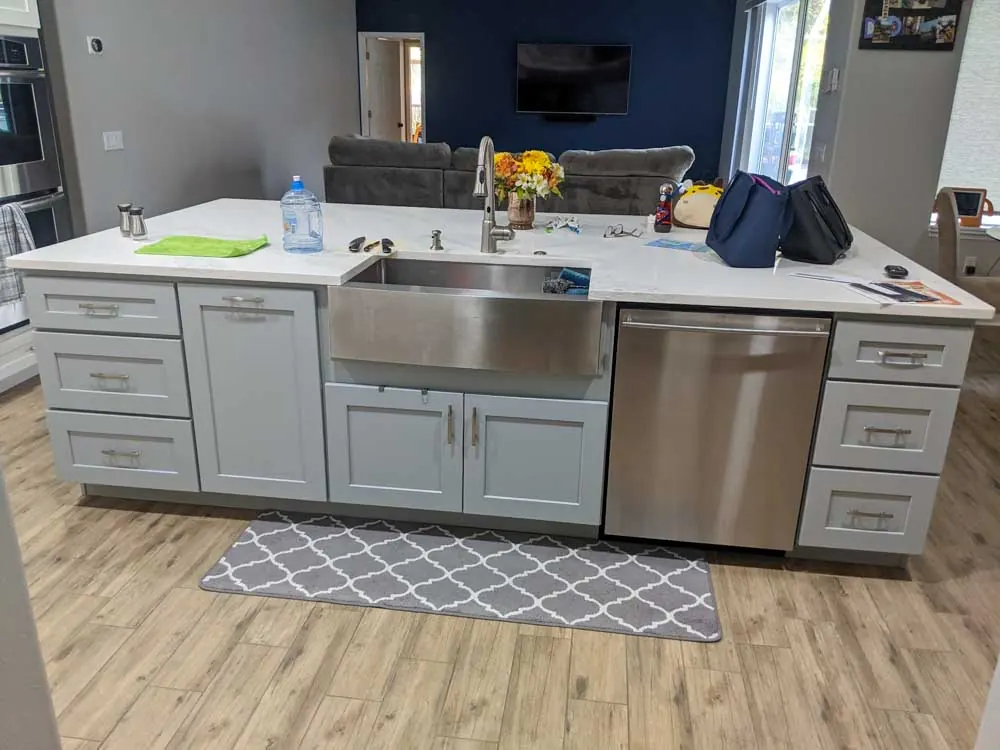
Shaker or raised panel is usually treated as a style question. In Florida it is also a construction question — but not for the reason most people assume. The door profile barely matters to humidity. What the center panel is made of matters enormously.
In this guide
Why both doors are built the same way
A shaker door and a raised-panel door are both five-piece doors: two stiles, two rails, and a center panel that floats in a groove. The difference is the profile. Shaker leaves the center panel flat and the frame square. Raised panel gives the center panel a shaped, contoured face and often adds a decorative profile on the inside edge of the frame.
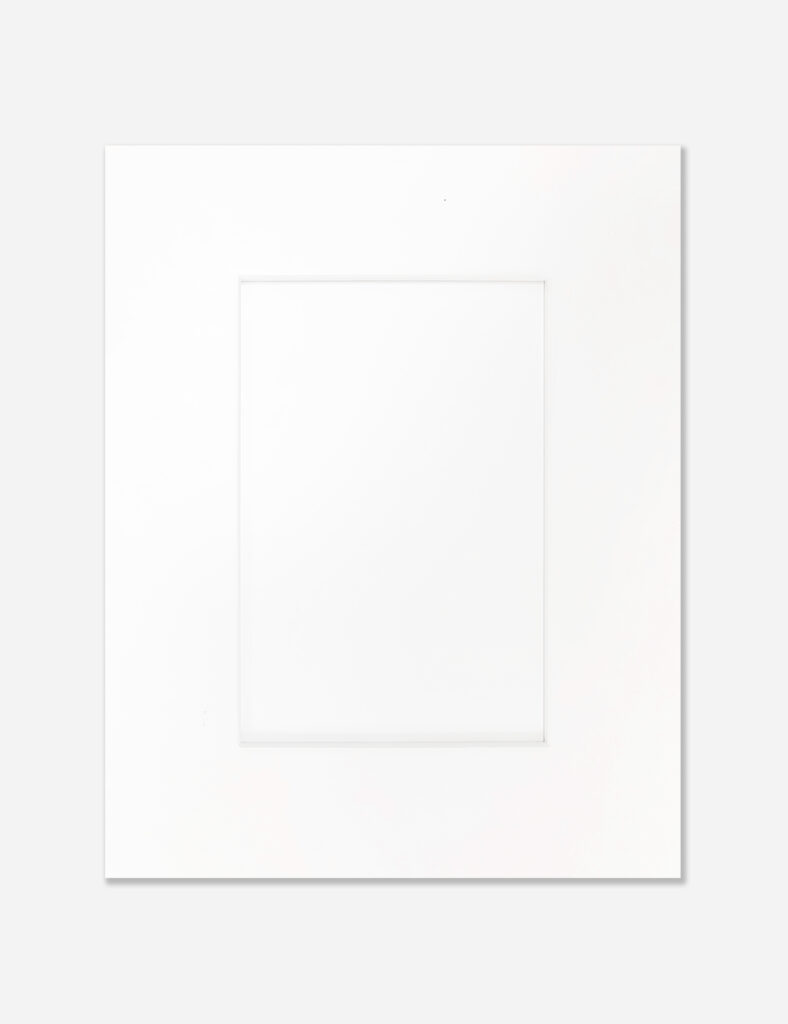
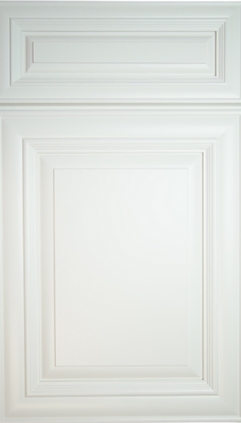
That floating panel is not a shortcut. It is the design solution to wood movement: the panel is deliberately left loose in its groove so it can expand and contract without splitting the door apart. Both styles handle movement the same way.
The variable that actually matters
What that center panel is made of is the decision that determines how the door looks in five years.
| Center panel | Behavior in a humid climate | Best for |
|---|---|---|
| Solid wood | Expands and contracts with seasonal moisture. Movement is normal and expected. | Stained finishes, where the wood grain is the point and slight movement is invisible. |
| MDF / HDF | Dimensionally stable — will not shrink, swell or telegraph seasonal movement. Vulnerable only to standing water. | Painted finishes, where a perfectly smooth, uninterrupted paint surface is what you are paying for. |
| Plywood | Far more stable than solid wood, less perfectly smooth than MDF under paint. | A middle option, and common in painted shaker doors. |
Witness lines, explained
Here is the complaint we get called about most, and it is worth understanding before you choose a finish rather than after.
On a painted door with a solid-wood center panel, the door is painted after assembly, so paint bridges the joint between the panel and the frame. When the panel shrinks, that paint film breaks along the joint and a thin line of unpainted wood shows at the edge of the panel. Those are witness lines. Over several seasons the paint can chip slightly along the same line.
This is not a defect and it is not a warranty claim. It happens on stock, semi-custom and custom cabinets alike, from every manufacturer, whenever a solid-wood panel is painted. The way to avoid it is to specify the door correctly up front: an MDF center panel for painted doors, or a solid-wood panel that has been primed or finished before assembly so no raw edge can ever appear.
What Florida does to a kitchen
Counter-intuitively, a conditioned Tampa home is a fairly stable environment — air conditioning removes humidity, so indoor levels stay within a manageable band most of the year. The stress cases are the gaps:
- The construction window. Cabinets delivered into a house without working air conditioning, in August, sit in the worst conditions they will ever see. We schedule around this.
- Vacant and seasonal homes. A snowbird property closed up with the thermostat at 82°F swings much wider than a lived-in house. If that is your situation, say so during design — it changes what we specify.
- Water events, not humidity. The damage we actually see is almost always liquid water: a slow supply-line drip under a sink, a dishwasher that vents steam into a face frame, a coffee station with no clearance. Any panel material fails under standing water. MDF fails visibly and permanently.
- Lanai and outdoor kitchens. Anything outside the conditioned envelope is a different specification entirely — marine-grade or all-weather materials, not interior cabinetry.
So which should you choose?
- Want painted, want it flawless? Either profile, with an MDF center panel. This is the single most reliable painted cabinet in this climate.
- Want the wood grain to show? Stained solid wood, either profile. Movement is invisible in a stained finish, and both shaker and raised panel look right.
- Want easy cleaning? Shaker. Fewer profiles means fewer places for cooking grease and dust to collect — a raised-panel door has more surface detail to wipe.
- Want a traditional look? Raised panel, and it suits a lot of Tampa-area homes better than the internet's shaker-only consensus suggests.
Style should be the decision. Construction should be the specification. Get the second one right and the first one is genuinely free choice.
Keeping either one looking new
- Wipe spills and splashes promptly — especially along the bottom edge of doors under a sink
- Mild soap and water, then dry. Skip ammonia, bleach and abrasive pads
- Crack the dishwasher only after the steam cycle finishes, not mid-cycle into a face frame
- Check under-sink plumbing twice a year — the cheapest cabinet insurance there is
- If the house sits empty, leave the AC set somewhere reasonable rather than off
Choosing your doors with us
You can see every profile and finish we offer on the cabinet door styles page, and see them installed in the project gallery. Because Trusted Choice Cabinets is owner-operated, the person specifying your door panels is the same person installing them.
Wondering what it all costs? Book a free 3D design and we will walk you through the numbers for your kitchen.
Frequently asked questions
Is shaker or raised panel better for Florida humidity?
Neither profile is inherently better. Both are five-piece doors with a center panel that floats in a groove so it can move with humidity. What matters is the panel material: an MDF centre panel for painted doors, or solid wood for stained finishes where movement is invisible.
What are witness lines on cabinet doors?
Thin lines of unpainted material that appear where a solid wood center panel meets the door frame. The door is painted after assembly, so when the panel shrinks the paint film breaks along that joint. It happens on stock, semi-custom and custom cabinets alike and is not a defect. Specifying an MDF center panel, or a panel primed before assembly, prevents it.
Are MDF cabinet doors a downgrade?
Not for painted work. MDF will not shrink, swell or telegraph seasonal movement, so it holds a smoother paint finish than solid wood over time. Its weakness is standing water, so the same care rules apply as with any cabinet: wipe spills, and check under-sink plumbing.
Which door style is easier to keep clean?
Shaker. A flat panel and square frame have fewer profiles for cooking grease and dust to collect in than a contoured raised-panel door with a profiled frame edge.
Planning a kitchen in the Tampa Bay area?
Trusted Choice Cabinets is owner-operated — Ryan measures, designs and installs, and every project starts with a free 3D design so you can see the kitchen before you commit to it.
Get a Free 3D Design Call +1 813-767-7535More cabinet guides
Planning
RTA vs Custom Cabinets: What Makes Sense for a Remodel?
August 25, 2026 · 7 min read
Where the 50-75% saving on RTA is real, where it disappears into filler strips, and a four-question framework for deciding.
Read the guide →